

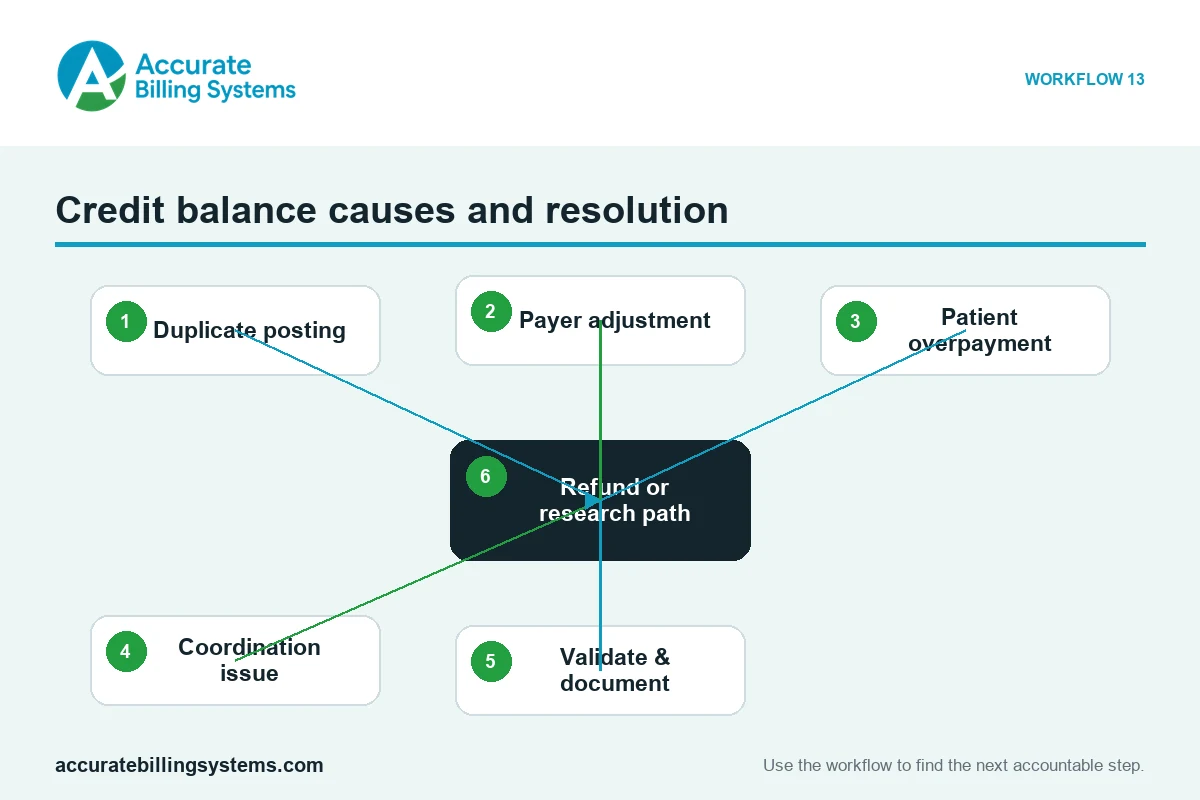
A credit balance is the start of the research, not the answer. Duplicate posting, a payer adjustment, patient overpayment, coordination issue or an earlier correction can all produce a credit-looking account. A medical billing credit balance audit should identify the cause before anyone decides what to do next.
Begin with a pilot sample drawn from different ages and balance types. The reviewer should trace each item through charges, payments, adjustments and available correspondence, then document what the record supports. A small pilot lets both sides agree on cause categories, evidence and approval steps before hundreds of accounts are labeled inconsistently.
Set a stopping rule for accounts with incomplete history. The reviewer may need to note the missing record, identify the next research source and leave the item unresolved. Guessing at an old adjustment makes the worklist look cleaner while weakening the evidence behind it. The final status should describe what is known and what still is not.
Research the history, then route the resolution
Some items will have a clear path. Others will be missing an old remittance, patient-payment detail or explanation for an adjustment. The audit should distinguish validated findings from accounts that remain unresolved. It should also name who can authorize an adjustment, refund or other next step; the person researching the account may not hold that authority.
Access to medical billing software, remittance information and patient-payment records may be necessary. Agree on a secure way to share records and a naming convention for evidence. The revenue-cycle overview helps connect this work with payment posting and reconciliation without implying that every credit has the same compliance or accounting treatment.
A cleanup should leave the next report easier to understand
The final worklist should show the population reviewed, cause, status, owner, evidence and remaining exception. Look for repeat patterns. If the same posting or handoff problem keeps creating credits, correct that process rather than budgeting for another cleanup.
Scope is important. Identification, research, resolution support and future monitoring are different services. Compare them with ongoing billing responsibilities and the billing cost guide. Qualified legal, accounting and payer-specific advisers should address obligations beyond the billing review. The audit’s contribution is a reliable account history and an action that can be explained. That record should remain usable after the project team has moved on. Future reviewers should not need to repeat the same research.