

A payment below expectation is not automatically a contract underpayment. It could reflect patient responsibility, a denial, a posting problem, bundling or an expectation built from the wrong source. Effective payer contract underpayment recovery begins by proving the variance.
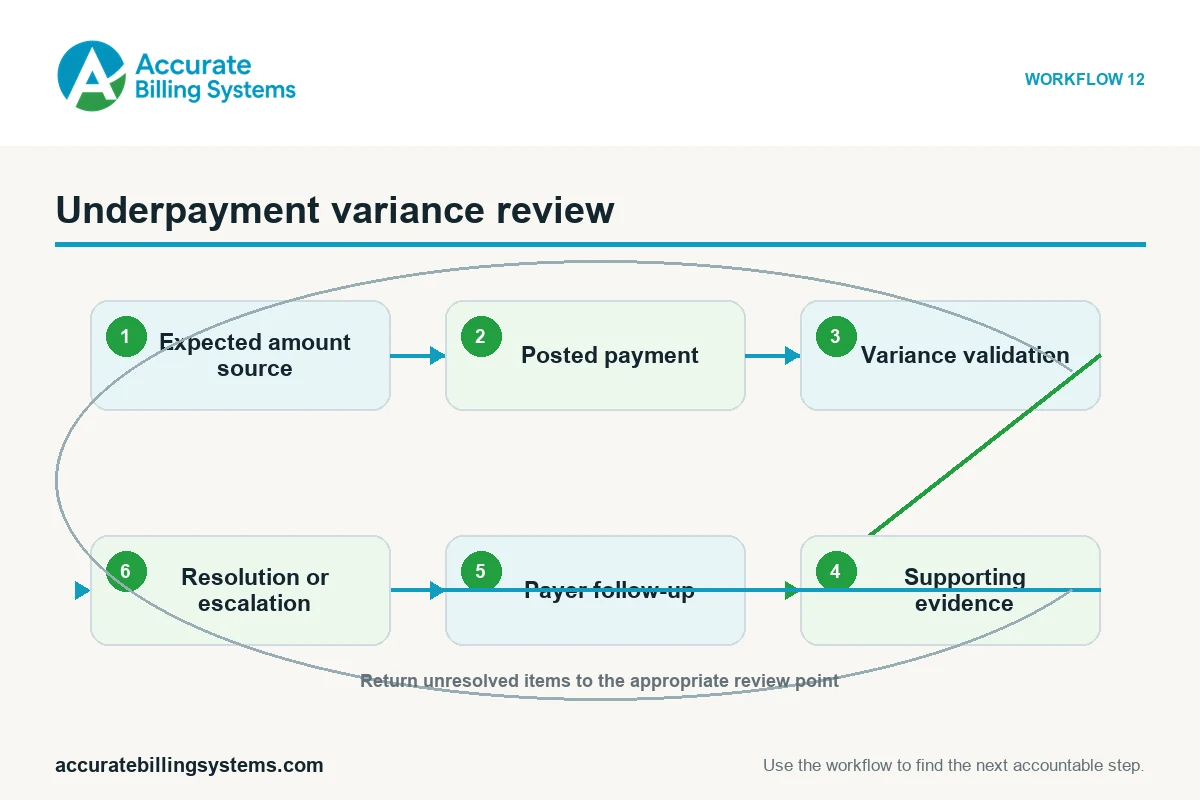
That sounds obvious, yet this is where inflated “opportunity” totals often begin. A credible team can show the expected amount source, the posted payment, the difference and the evidence supporting follow-up. It should also say when the available record is not strong enough to make that conclusion.
Use one account that appears promising and one that falls apart after review. The second example is just as valuable. It shows whether the analyst can close an item honestly instead of keeping it in a growing recovery estimate. A reliable service should be comfortable explaining why a flagged difference was not pursued.
Give every variance a reason before giving it a value
Separate suspected contract variances from denials, recoupments, posting issues and unresolved patient responsibility. Then prioritize with more than dollar size. Age, filing limits, available documentation and repeated patterns all affect where work belongs.
Retain the source used for the expected amount and the date it was last reviewed. Contract terms and payer processing can change while an item is open. A good work note lets another analyst understand the original conclusion rather than start the research again. These duties should be distinguished from ordinary medical billing services in the proposal.
Measure the disposition, not only the amount identified
Reports should show suspected, validated, pursued, resolved and closed items separately. An item may be determined not to be an underpayment after review, and that is a useful outcome when the analysis is documented. The practice should also see which questions remain with a payer and which require internal information.
Pricing may be fixed, percentage-based, included in a larger service or offered as a project. Compare it with the billing cost framework and review data rights in the contract terms guide. To compare billing companies, provide the same payer mix, contract-data availability and sample accounts. The best recovery conversation is specific enough that a skeptical practice manager can follow the math. It should identify the source document, last action and next deadline without turning a possible variance into promised revenue. That restraint is part of a credible analysis.