

A new medical-office location rarely needs “just an address update.” The legal entity, service location, providers, payer records and supporting documents all have to line up. Before pricing provider enrollment services for new locations, build the roster that the project will actually use.
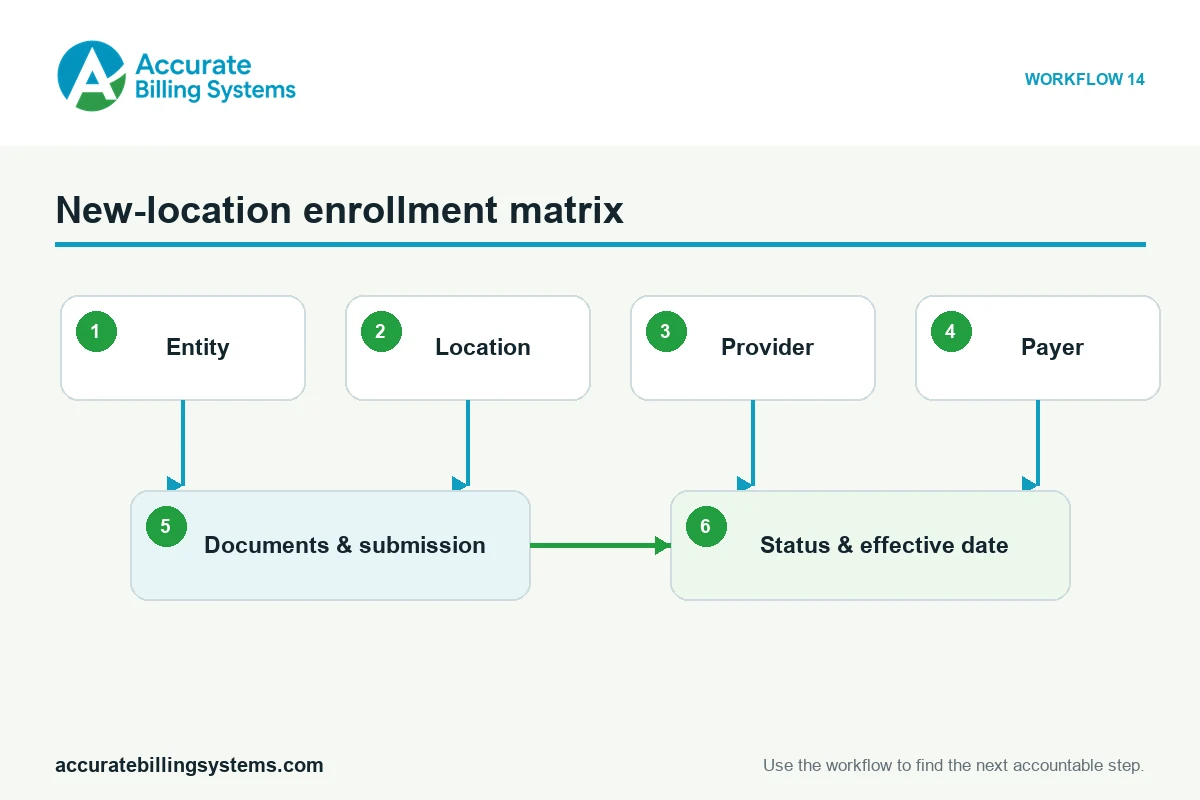
A good roster is a matrix: entity, tax information, address, provider, payer, current status, required action and desired opening date. Mark uncertain items instead of filling them with assumptions. That one sheet becomes the reference for the practice, enrollment team, scheduling staff and billing operation.
Review the matrix in a short opening meeting with those groups. The enrollment specialist may understand payer submissions, while scheduling knows which providers are expected on day one and billing knows which combinations must be visible downstream. Resolving those differences early is cheaper than discovering them through a rejected or misrouted claim after the office opens.
“Submitted” and “ready to bill” are not the same status
The tracker should show submission date, reference information, latest follow-up, outstanding request and confirmed status. It should separate organizational work from provider-level work and identify who supplies signatures, attestations or information only the provider can confirm.
Enrollment status also needs to reach operations. Scheduling and billing should not infer that a provider-location-payer combination is effective because an application receipt exists. Connect confirmed information with the organization’s billing software and relevant billing responsibilities. No outside company controls payer timing, but it can maintain a disciplined record of the work.
Plan an early-claim check after opening day
Select a small sample of early encounters and verify that provider, location and payer information appear as expected through submission and response. Record the result, owner and corrective action. This does not prove that future claims will pay. It confirms that the approved enrollment information and system configuration reached the workflow everyone intended.
Compare fees using the same roster. A quote might be per application, provider, payer, project or ongoing maintenance period. Ask how corrections, revalidation and later demographic changes are handled. The cost guide and contract terms checklist help surface exclusions and data rights. The useful deliverable is not a stack of receipts; it is a current operational picture that the opening team trusts. Keep it updated after launch so later roster changes do not restart the project from memory. Name the staff member responsible for maintaining it.