

DME Billing Services: Track the Order, Documentation and Claim as One Record
DME billing support should connect order details, supporting records, delivery information and payer follow-up in a visible process.
Clear explanations for comparing billing companies, software, costs, contracts and the day-to-day work that keeps a revenue cycle moving.
Practical guidance for practice owners, administrators and revenue-cycle teams.
DME billing support should connect order details, supporting records, delivery information and payer follow-up in a visible process.

An FQHC billing proposal should demonstrate the organization’s actual encounter, payer and reporting workflows instead of relying on a specialty label.

Home health billing works best when field documentation, office review and claim follow-up move on a shared, visible timeline.

Pain management billing support should make documentation and authorization exceptions visible before they become aging claims.

A useful ophthalmology billing process reconciles what happened in the office with the charges, claims and payer responses that follow.

Podiatry billing works best when office visits, procedures and related details move through one visible process.

Radiology billing support should show how imaging activity becomes complete claims and how missing information is resolved.
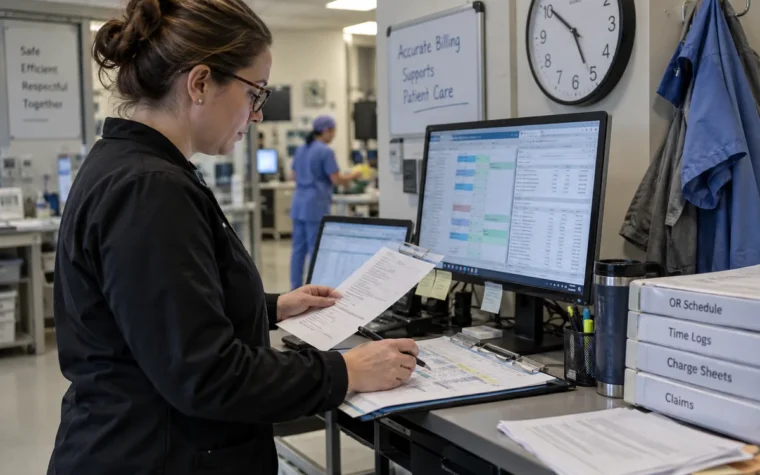
Anesthesia billing proposals become easier to judge when every company demonstrates the same ordinary and difficult cases.

Oncology billing comparisons should focus on how complete treatment information moves into the claim and how exceptions reach the right person.

Neurology billing support should connect clinical documentation, testing, authorizations and claim follow-up without hiding the exceptions.