

In a small rural practice, the person answering a billing question may also be scheduling patients, covering the front desk and helping a provider get through the day. Outside support has to reduce ambiguity, not add another inbox. That is the real test of medical billing for rural practices.
Write down the work that currently depends on one person: eligibility, authorization follow-up, charge questions, rejections, denials, posting or patient balances. Then identify which responsibilities can move outside and which must stay close to the practice. A “full service” label cannot make that decision for you.
Do the exercise on an ordinary staffing day and on a thin one. If the proposed process works only when the office manager is available, it is not a continuity plan. Decide which requests can wait, which need a backup and which reports another authorized staff member should be able to reach without asking the absent employee for a password or private file.
Design the communication plan for the staff you actually have
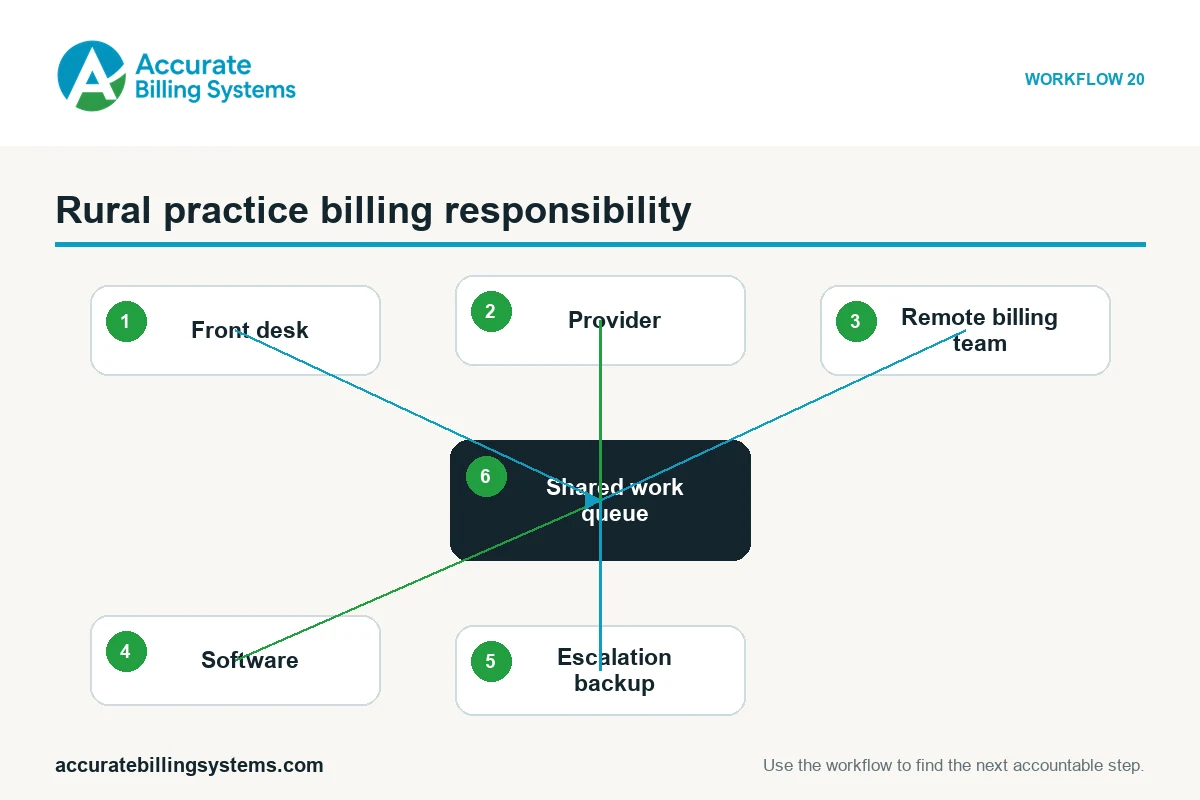
Requests should be grouped, prioritized and sent to a named role with a backup. A documentation question, interface failure and filing-limit concern should not all interrupt the same person in the same way. The account record should preserve the request and response so a day off does not erase the history.
Reliable remote access matters too. Review how the company connects to medical billing software, how an outage or failed transaction is handled and whether essential reports can be exported. Compare that answer with the defined billing service scope. Limited local staffing makes a missing backup more disruptive, but it does not excuse weak security or vague ownership.
A useful report should save management time
Put exceptions first: missing charges, held claims, denials, aging accounts and unresolved patient balances. Managers should be able to reach the details without requesting a custom explanation every month. The report should also distinguish work waiting on the practice from work waiting on a payer.
Count retained staff effort when comparing cost. Connectivity, patient communication, older A/R and transition support may change the real workload. Use the billing cost guide and outsourced-versus-in-house comparison, then compare medical billing options with the same staffing and system facts. The best fit should leave a busy office with fewer loose ends and a calmer Monday morning.