Clearinghouse rejection management should account for claims that were sent but still need correction before progressing through the billing chain. When you compare clearinghouse rejection management, ask how the billing company reconciles transmissions with responses. A “submitted” counter can conceal work that didn’t move forward as intended.
Keep rejection work distinct from denial follow-up. CMS explains that electronic claims can fail initial edits before later coverage or payment review. The practical buying question is whether your provider can show the stage, reason, owner and next action for each exception instead of placing everything in one unpaid-claims bucket.
Follow the response, not just the outbound file
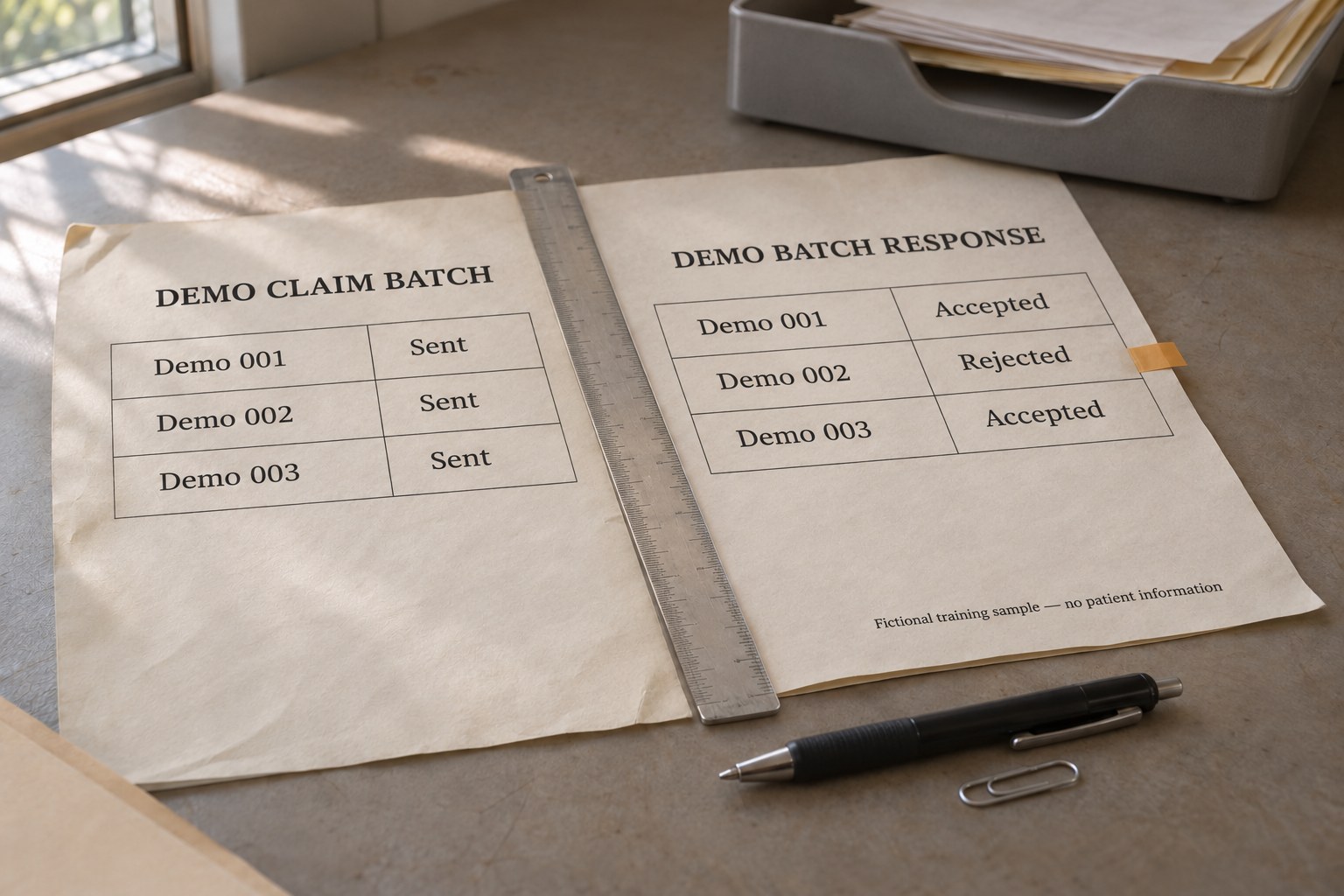
Have each finalist demonstrate a fictional batch containing accepted work, a rejected item and an item without the expected response. Ask how staff know which result belongs to which submission. The provider should explain its reconciliation without assuming a successful file transmission establishes acceptance of every claim.
The revenue-cycle workflow guide describes these adjacent stages. For the underlying distinction, review the CMS electronic claims guidance. Ask your provider to demonstrate the actual responses its systems use rather than assuming every intermediary displays the same labels.
Check correction ownership and resubmission
Use an example requiring practice information and another that the billing team can correct within its authorized scope. Who asks the question, where does the answer arrive and how is it linked to the original exception? After correction, ask the vendor to show how the replacement submission is tracked and how duplicate work is avoided.
The medical billing services overview helps define the division of work. The coding audit handoff article reinforces why qualified documentation or coding questions need an appropriate owner rather than an administrative guess.
Measure the unresolved queue and repeat causes
Request a report of new exceptions, corrected items, resubmitted work and items still awaiting action. Ask whether dates represent the original submission, response or latest staff activity. Otherwise, a recently touched item may look newer than the underlying problem.
The claims report validation guide helps test those definitions. Use the billing buyer’s guide to include recurring-cause review and practice feedback in the service scope. A useful provider should identify preventable patterns without promising that a particular tool eliminates every rejection. Request a sample weekly review showing which repeat issues returned to the practice and which required a change inside the billing team.
Compare the same submission volume, systems, correction work and follow-up expectations. Get medical billing prices with response reconciliation and rejection follow-up explicitly included.